


Gemini Hijab Photo Prompts: 12 AI Prompts That Keep the Hijab On
12 ready-made Gemini hijab prompts: studio portrait, modest outfit, wedding dress, couple photo, trend adaptations and a faceless profile picture. We show our test where a trend prompt uncovered the hair in 6 of 6 images, and the line that fixed it.
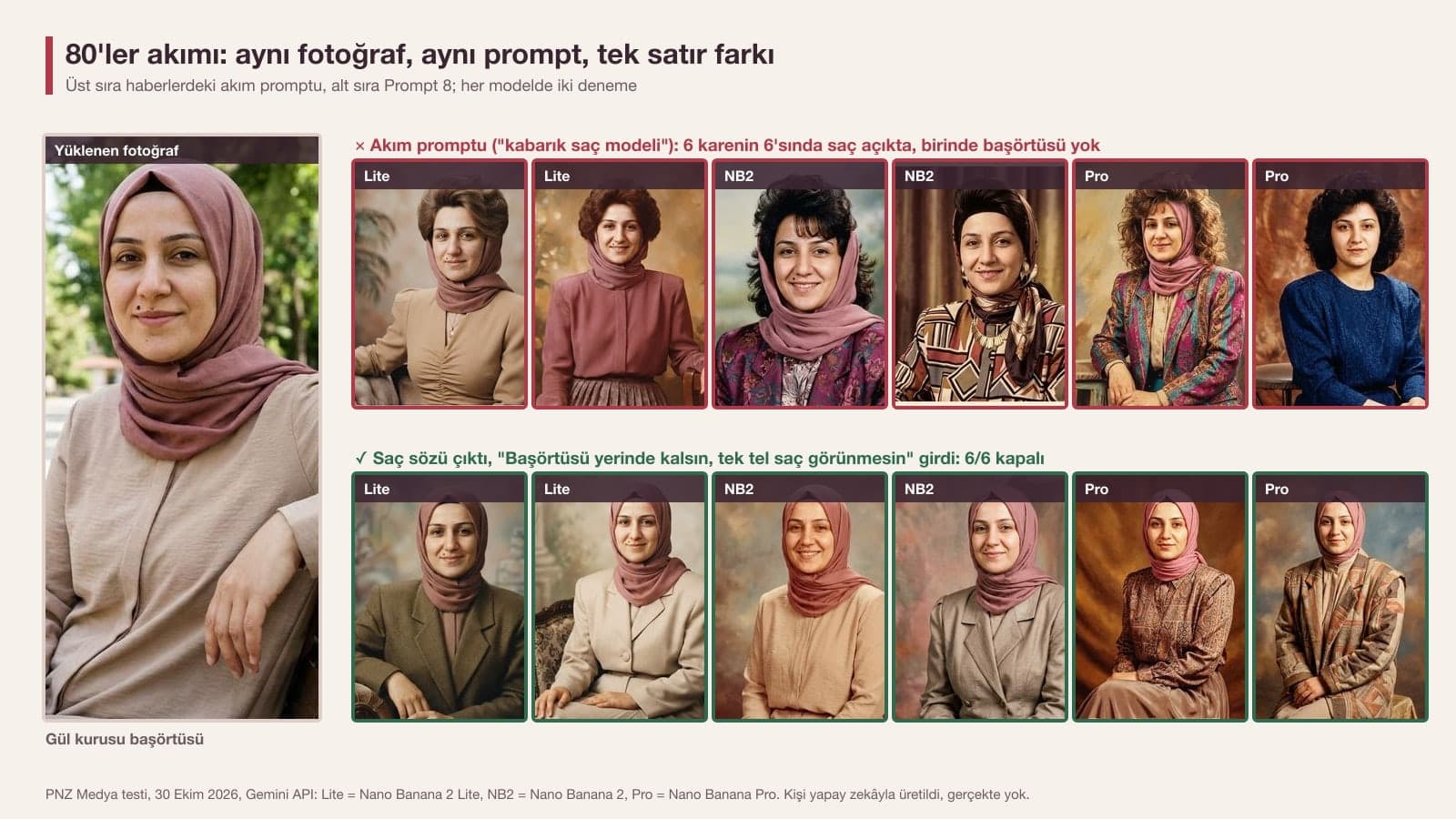
- We ran the 80s trend prompt that was going around in the news through Gemini 6 times with a photo of a woman in a dusty rose hijab: hair was showing in 6 of 6 images, and in one the hijab was gone entirely. The prompt said "big, voluminous hairstyle."
- When we removed the hair wording and wrote "Keep the hijab in place, with not a single strand of hair showing" (tested in the original Turkish), the hijab stayed in place in 6 of 6 images with the same photo and the same models.
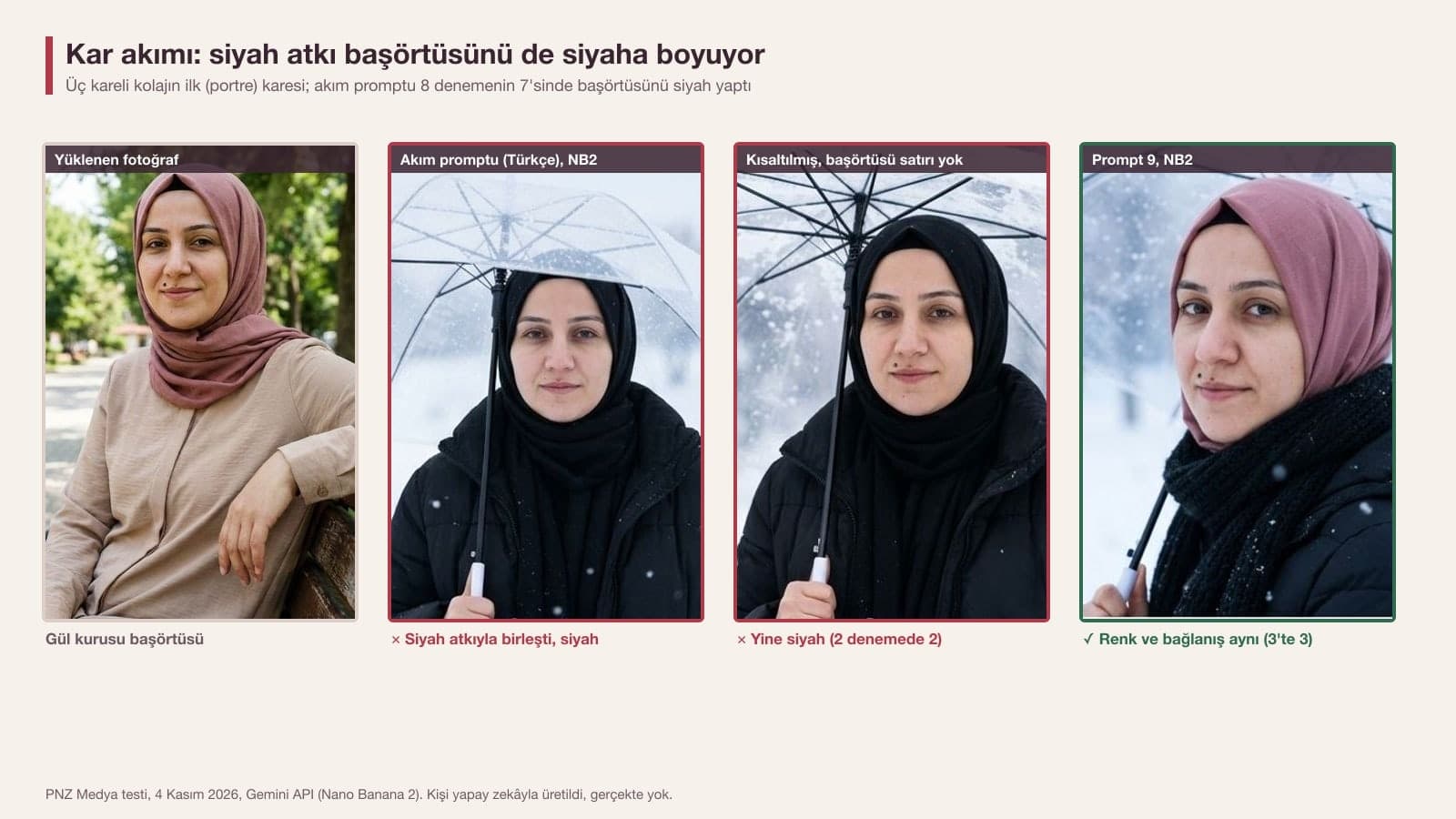
- The "black scarf" line in the snow trend prompt turned the hijab black in 7 of 8 tries. A prompt that gave the hijab's color and tying on a separate line kept the dusty rose in 3 of 3 tries.
- Describe the hijab in the first lines of the prompt with its color, fabric and how it is tied. Writing only "hijabi" or "wearing a hijab" leaves the color and shape up to the model.
- Of the 12 prompts in this post, 10 work with your own photo and 2 work without one. For the faceless profile picture, you don't need to upload any photo.
On October 30, while testing the 80s trend, we gave Gemini a photo of a woman in a dusty rose hijab together with the trend prompt shared in the news, six times. In all six images her hair was showing: big, blow-dried, cut in an 80s style. In one, the hijab was gone completely. The prompt said nothing about the hijab, but it did say "big, voluminous hairstyle." So if you are looking for a Gemini hijab prompt, here is the short answer: describe the hijab in the first lines with its color, fabric and how it is tied, and delete every line that mentions hair.
Below you'll find images from that test and from the snow trend test, a table showing what happened to the hijab across six separate tests, and 12 ready-made prompts: studio portrait, waterfront, trying hijab colors, modest outfit, hijab wedding dress, couple photo, two trend adaptations, watercolor portrait, faceless profile picture, and a fix message to send in the same chat when the hijab gets messed up.
We did not run new tests for this post; on November 16 our test budget did not cover another round. The numbers come from six tests we ran on the Gemini API between October 30 and November 10 with Nano Banana 2 Lite, Nano Banana 2 and Nano Banana Pro. The input each time was an AI-generated woman in a dusty rose hijab who does not exist in real life. Prompt 8 and Prompt 9 were tested word for word in those tests, in their original Turkish (we turned the person-specific lines in Prompt 9 into square brackets); the English versions here are our translations. The other 10 prompts were not tested in this form; we wrote them using the rules that came out of the same tests.
How to Make a Hijab Photo in Gemini: 5 Steps
- Pick a photo where your face is clear and facing the camera, and the color and tying of your hijab are easy to see. The prompts rely on this image when they say "as in the photo."
- Open Gemini and attach the photo to your message. A Google account without a paid plan is enough; to edit photos you need to be 18 or older.
- Copy a prompt from below. Fill in the color, fabric and tying in the hijab line to match your own photo; do not shorten that line.
- If you use a trend prompt you found somewhere else, check whether it contains "hair", "hairstyle" or an accessory that sits where the hijab sits (scarf, beanie, hat). If it does, delete that word and put the sentence from Prompt 8 in its place.
- Look closely at the forehead, temples and nape line in the image you get. If hair shows or the color changed, send Prompt 12 without starting a new chat.
Both trend prompts we tested had wording about hair: "big, voluminous hairstyle" in the 80s prompt, and "base it on the face, hairstyle and body in the reference" in the Turkish version of the snow trend. Finding and deleting that wording before copying the prompt was the single most useful fix.
The Test: How a Trend Prompt Broke the Hijab
In the 80s test, we ran the same photo twice on each of three models. In all six images from the trend prompt, the hijab had slid back, dropped to the neck or disappeared; hair was above the forehead in every image. In Nano Banana Pro's second try, the woman sat in the studio with no hijab, in a navy blouse. When we removed "big, voluminous hairstyle" from the same prompt and wrote "Keep the hijab in place, with not a single strand of hair showing" in its place, the hijab stayed put in six of six images, and face similarity was above the same-person threshold in all six.
The snow trend had a different problem. The prompt also mentioned hair, but the line that did the real damage was "black winter coat and black scarf": the model drew the scarf and the hijab as one piece, and the dusty rose hijab turned black in seven of eight tries. A shortened version of the trend that still didn't describe the hijab also gave two black results in two tries. Once we added the sentence "The hijab stays in place in every panel, its color and tying as in the photo; a beanie or hood does not replace it," all three models kept the color and the tying.
| Test and date | Prompt | What happened to the hijab? |
|---|---|---|
| 80s trend, October 30 | Trend prompt from the news ("big, voluminous hairstyle") | Hair showing in 6 of 6 images, no hijab in 1 |
| 80s trend, October 30 | Hair wording removed, hijab sentence added (Prompt 8) | In place 6 times out of 6, no hair visible |
| Snow trend, November 4 | Trend prompt, English and Turkish versions ("black scarf") | Turned black in 7 of 8 tries |
| Snow trend, November 4 | Color and tying line added (Prompt 9) | Same color and tying in 3 of 3 tries |
| Childhood photo merge, November 3 | Trend prompt and corrected versions, two photos | In place in 22 of 22 images; no hijab added to the child |
| Scene change, full-length 2K, November 3 | Nano Banana 2, image where the person appears small | Hijab color changed in 1 of 3 images |
| Emoji, November 5 | Generic "keep glasses, mole, hijab the same" list | Glasses that weren't in the photo appeared in 4 of 4 images |
| Hug, November 10 | Two photos, bench scene, with a description of each person | In place 2 times out of 2 |
There is a pattern in the table. Two things broke the hijab: the prompt mentioning hair, and naming the color of another item that sits where the hijab sits (the scarf). In prompts without hair or a scarf, the hijab held; that includes the childhood merge trend prompt, which never mentions the hijab at all. A generic protection list caused a different problem: in the emoji test, because the word "glasses" was on the list, the woman, who doesn't wear glasses, got glasses in four images.
12 Gemini Hijab Prompts (Copy and Paste)
Fill in the square brackets to match your own photo. Do not delete the hijab line in any prompt; if you don't wear glasses, write "no glasses" and do not leave the line empty. You can use them in ChatGPT too; we did not measure the hijab results there.
1) Studio portrait
Create a studio portrait of the woman in the photo I uploaded.
Hijab: color [dusty rose], fabric [thin chiffon], tied as in the photo [pinned under the chin, ends resting on the shoulder]. The hijab covers the forehead and temples; not a single strand of hair is visible.
Take the face exactly from this photo; no beautifying, no making her look younger, no added makeup. Visible on the face: [thick straight eyebrows, a small mole to the left of the upper lip, no glasses], [age: thirties].
Calm expression, mouth closed, teeth not visible.
Clothing: [long cream tunic], sleeves covering the arms down to the wrists.
Plain, text-free [light gray] studio backdrop; soft window light from the left.
Framed from the waist up, image 4:5 vertical. The phone, bag and earphones in the photo are not in this shot; her hands are empty. No one else in the frame; no text or logo.2) Short version (quick try)
Show the woman in this photo [on a wooden bench in a park full of autumn leaves]. Keep the hijab in place: color and tying as in the photo, not a single strand of hair showing. Same face and expression, mouth closed. Image 4:5 vertical; no text or logo in the frame.The short prompt does not list what's on your face; if your mole or eyebrows change, switch to Prompt 1.
3) Late afternoon on the waterfront
Show the woman in the photo I uploaded in Istanbul, on the Arnavutkoy waterfront road, in late afternoon light.
Hijab: color [navy], tied as in the photo. The wind only gently moves the end of the hijab that falls over the shoulder; the hijab does not come loose, no hair is visible.
Face exactly from this photo; visible on the face: [eyebrows, mole, glasses]. Slight smile, mouth closed, teeth not visible.
Clothing: [beige trench coat over a white shirt].
The sea and the opposite shore behind her; no shops, signs, posters or text along the waterfront. Only this woman in the frame, no passersby.
Framed from the knees up, image 4:5 vertical.If you leave out the wind line, the model may move the hijab on its own on a windy waterfront; the line limits the movement to one end. In the snow test, writing "shop signs blurred" brought in fake signs with readable text, and writing "no shops" did not.
4) Changing the hijab color
Change only the hijab in this photo.
New hijab: [olive green, #6B7A3A], plain with no pattern, matte [cotton] fabric. The tying, the way it frames the face and the ends falling over the shoulders stay as in the photo; no hair visible at the forehead or temples.
Keep the face, expression, clothing, background, lighting and framing the same. Do not add new jewelry, brooches, pins or patterns. No text or logo.This is the fastest way to see which color suits your face. Write a color code next to the color name: in our October 22 clothing test, a prompt saying "red" drifted to burgundy on Lite, while the prompt with a code hit the target tone; Nano Banana 2 drew it a little dark even with the code.
5) Trying on a modest outfit
Change only the outfit in this photo; leave the hijab exactly as it is (color [dusty rose], same tying, no hair visible).
New outfit: [long beige trench coat over a plain white shirt, black wide-leg trousers, white sneakers]. Sleeves cover the arms to the wrists, trouser hems at the ankles.
No belt, bag, watch, necklace or earrings; do not add any accessory that is not in the photo.
Same face and expression, mouth closed. Plain, text-free [off-white] wall in the background.
Full-length framing with the shoes visible; image 2:3 vertical.This is what people want when they search "Gemini hijab outfit." In a full-length image the face stays small: in our November 3 test, full-length images averaged 0.66 face similarity and waist-up images 0.76. Once you like the outfit, use the framing from Prompt 1 if you want a closer shot in the same clothes.
6) Hijab wedding dress
Show the woman in the photo I uploaded in a modest bridal gown, as a bridal portrait.
In this shot the hijab is [ivory satin], tied similar to the photo, under the chin; no hair visible beneath it. Over the hijab, a thin [ivory tulle] veil falls from the back of the head to the shoulders.
Wedding dress: [ivory], long sleeves, high neckline, [fine lace embroidery on the sleeves and bodice], full skirt reaching the floor.
Face exactly from this photo; visible on the face: [eyebrows, mole]. Slight smile, mouth closed. Makeup only as much as in the photo.
Setting: [the courtyard of an old mansion with stone walls], soft afternoon light. No one else in the frame; no text, monogram or logo.
Framed from the knees up, holding [a small bouquet of white roses]; image 4:5 vertical.The hijab color changes on purpose here, so we wrote the new color out explicitly. For different wedding dress styles, change only the dress line.
7) Couple photo (with two photos)
Show the woman in photo 1 and the man in photo 2 in the same shot, walking side by side [on a beach at sunset].
Woman: hijab as in photo 1, color [dusty rose], no hair visible; clothing [long cream cardigan and beige skirt]. Man: [navy shirt, beige trousers]; keep his [short beard, glasses] exactly as they are.
They hold hands, half turned toward the camera; the woman is on the left from the viewer's side.
Faces exactly from their own photos; mouths closed, slight smiles.
Only these two people in the frame; the place, objects and background people from photo 1 are not in this shot. No text or logo.
Image 3:2 horizontal.For the two-photo prompt, switch Gemini's model selection to Flash or Pro. According to Google's help page, Nano Banana 2 Lite, the free plan's default, was not designed for more than one reference image. In our November 10 hug test, when the line "only these two people in the frame" was missing, the model carried the street and pedestrians from the first photo into the new image.
8) 80s trend (hijab version)
Preserve the face and overall identity of the person in this photo as much as possible. Recreate the photo as if it had been taken in a professional photo studio in the mid-1980s. Keep the hijab in place, with not a single strand of hair showing. Use period 80s fashion with shoulder-padded clothing, a nostalgic studio backdrop, analog film texture, natural film grain and the color tones typical of cameras from that era. The image should look realistic, natural and as if it came from an old family album.This is a translation of the prompt we tested word for word in Turkish, six times, on October 30. In two of the Lite images, a paper print border appeared around the photo. If you don't want a border, change the last sentence to "The image should look realistic and natural; no frame, date or text on the edges." We did not test this change separately.
9) Snow trend, three-panel collage
Make a three-panel vertical snow collage with the person in the photo I uploaded. The hijab stays in place in every panel, its color and tying as in the photo; a beanie or hood does not replace it. Image 9:16 vertical; three equal horizontal strips stacked on top of each other, with thin white lines between them. Take the face exactly from this photo, no beautifying or making her look younger; this person has: a [dusty rose] hijab framing the face as in the photo with no hair visible, [thick straight eyebrows], [a small mole just above the upper lip on the viewer's left], [thirties]. Calm expression, mouth closed, teeth not visible. Clothing: black puffer jacket and black scarf.
Panel 1: chest-up portrait; holding a clear umbrella, turning her head slightly over her shoulder and looking at the camera; blurred snow behind.
Panel 2: wide shot; standing alone in a wide, flat, snow-covered field, her own footprints behind her.
Panel 3: close-up of only her eyes and eyebrows, a few snowflakes on her lashes.
Cold colors, mostly white. No text, signature or date in the panels.The black scarf is still here, but because the hijab color is written on its own line, the two did not mix on any of the three models in the November 4 test. If your hijab is black, change the scarf to another color; two black pieces can still merge.
10) Watercolor portrait
Draw the woman in the photo I uploaded as a [watercolor] portrait on plain white paper that reaches the edges.
Hijab as in the photo: color [dusty rose], same tying, no hair visible.
On the face: [thick straight eyebrows, a small mole on the upper lip]. Do not add glasses, moles, earrings or jewelry that are not in the photo.
Framed from the shoulders up, face in the center of the paper. Background is blank white paper; no table, brush, signature or text.
Image 1:1 square.The "do not add glasses that are not in the photo" line comes from the emoji test; in stylized drawings, the model added any feature named on the list to the person.
11) Faceless profile picture (no photo needed)
Create a profile picture where the face is not visible: a young woman in a [dusty rose] hijab, seen from behind and slightly to the side, [holding the railing on the deck of a ferry, looking at the sea].
The hijab is neatly tied; no hair visible at the nape or temples. She wears a [beige trench coat].
Her face is not turned toward the camera; her face is not visible at all.
Late afternoon light, natural and soft colors. No shops, signs, flags or text in the background; no one else in the frame.
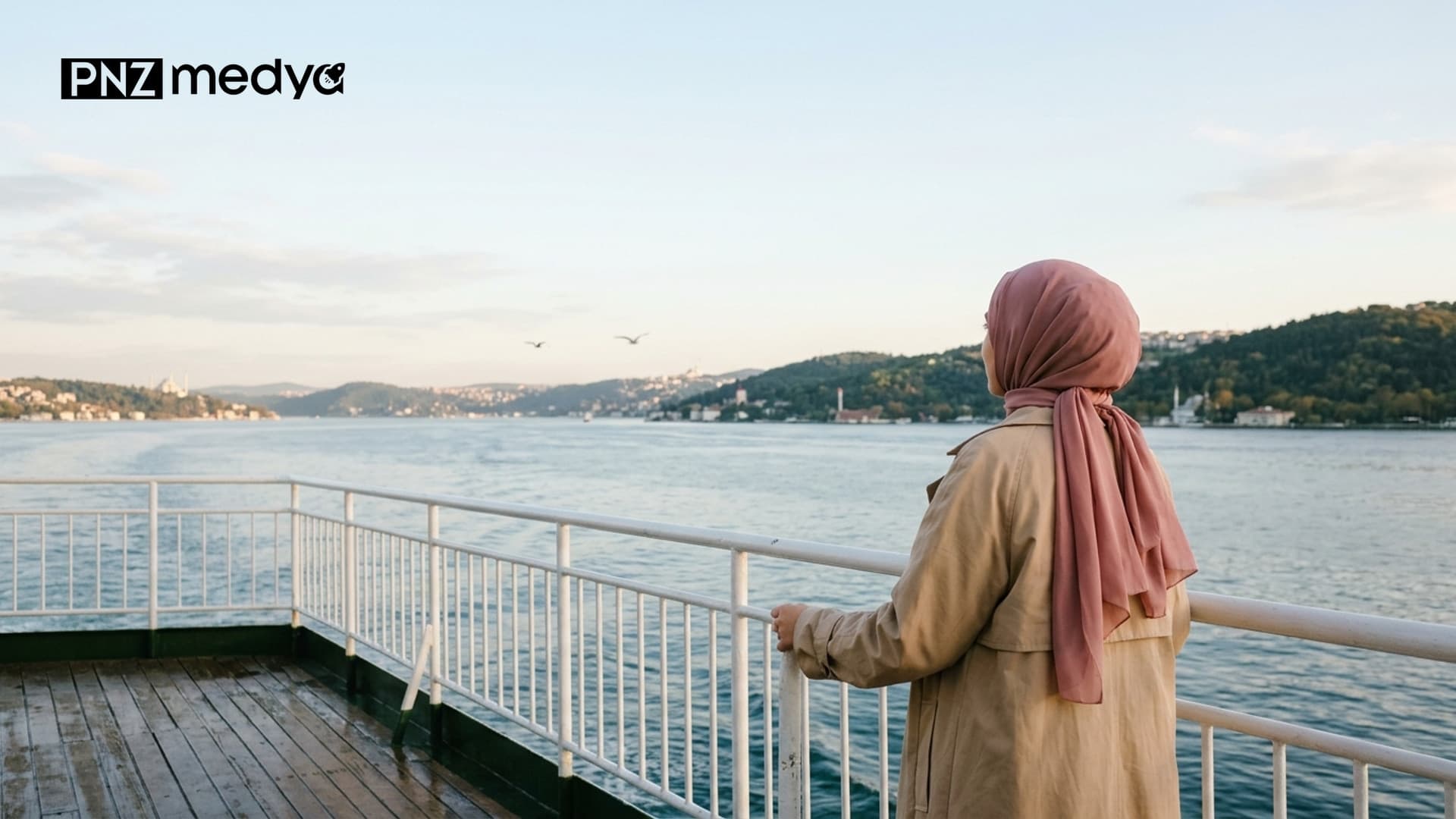
Image 1:1 square; the person in the center of the frame, sized so a round profile frame does not cut off her head and shoulders.Most of the images people look for with searches like "hijabi girl profile pictures" and "faceless hijab profile picture" are this kind: the person seen from behind or with the face out of frame. Since you don't upload a photo, nobody's face is used; the age limit for generating images is 13. We made the cover image of this post with this setup.
12) Fix message (in the same chat)
The hijab has changed in this image. Fix only these:
1) Make the hijab color [dusty rose] again, with no pattern.
2) No hair visible at the forehead, temples or nape; the hijab frames the face as in the photo.
3) Tied as in the photo [pinned under the chin]; a scarf, beanie or hood does not replace the hijab.
4) No glasses, earrings or jewelry that are not in the photo.
Do not change the face, expression, clothing, background or framing.Send it in the chat where the image was generated and keep only the items that are wrong. In the November 3 test, saying "you changed my face, fix it" did not raise similarity (0.72 to 0.72); a fix that listed the features one by one raised it to 0.84.
Search the prompt for every word about hair and delete it ("hairstyle", "wavy", "voluminous", "bangs"); in the 80s test, we removed the hair wording when we added the hijab sentence. Then send Prompt 12 in the same chat. If the request gets refused, look at the words that describe the person and the clothing: in our newborn test, the word "naked" made Nano Banana Pro refuse the request.
How to Describe the Hijab in a Prompt: Color, Fabric, Tying Style
Three rules came out of the tests. First, name the color: "dusty rose," "navy," "olive green." When the color is left out, the model can carry the dominant color of the scene onto the hijab; in the snow test, that was the black of the scarf. Second, describe how it is tied: pinned under the chin, ends thrown over the shoulder, a shawl wrapped around the neck, or a turban style. Third, the hair line: writing "no hair visible" works together with deleting every phrase that mentions hair.
Phrasing these sentences positively also matches Google's own advice. The Gemini API image generation docs recommend describing the scene you want in positive terms:
Instead of saying "no cars," describe the intended scene positively: "an empty, deserted street with no signs of traffic."
In our prompts, that is the sentence "the hijab covers the forehead and temples; not a single strand of hair is visible." The same docs also recommend refining the result in small steps within the conversation, which is why Prompt 12 goes into the same chat.
Free Plan or Paid Plan?
You don't need a paid plan for these prompts. On an account without a plan, images are mostly drawn by Nano Banana 2 Lite and downloads are 1K; a Google AI plan adds 2K downloads and the option to regenerate the image with Nano Banana Pro. Switching models did not fix the hijab problem: the 80s trend prompt uncovered the hair on all three models, and the corrected prompt kept it covered on all three. In the snow test, the only trend image that kept the hijab came from Lite. The prompt made the difference.
Common Mistakes
- Pasting a trend prompt as is. Both trend prompts we tested mentioned hair, and both broke the hijab.
- Mentioning the hijab only as "hijabi" or "wearing a hijab." When the color and tying aren't written, the model picks both on its own based on the scene.
- Writing a generic protection list. In the emoji test, the "keep glasses, mole, hijab the same" list made the model add glasses to a woman who doesn't wear any; list only what the person actually has.
- Asking for a scarf or shawl in the same color as the hijab. The two pieces merge and get drawn as one.
- Starting with a full-length image. When the face is a small part of the frame, similarity drops; get the waist-up image right first.
- Writing only "fix it" in a correction. List what's wrong item by item.
Age Limits, Consent and ID Photos
You need to be 18 or older to edit photos in Gemini and 13 or older to generate images without a photo. Get permission before uploading someone else's photo: a face photo is personal data under privacy law (in Turkey, the KVKK), and an image that shows a hijabi friend without her hijab, shared without her consent, is a serious privacy problem.
Gemini's new avatar feature lets you record your face and voice once and then generate images without uploading a photo. According to Google's page, avatars are for users 18 and older and currently work only in English; during recording your eyes, nose and mouth must be visible, with no sunglasses, mask or hat. The page says nothing about headscarves, and we have not tested this. ID, passport and visa photos follow separate rules; our ID photo post explains what an ID photo with a hijab should look like and why AI photos can't be used in official applications.
Our tests found two causes: the prompt mentioning hair ("big, voluminous hairstyle") and naming the color of another item that sits where the hijab sits ("black scarf"). When we deleted the hair wording and wrote "Keep the hijab in place, with not a single strand of hair showing," the hijab stayed in place in 6 of 6 tries. The test used the original Turkish prompt.
Yes. You can upload a photo and use these prompts with a Google account that has no paid plan; downloads are 1K. For the two-photo Prompt 7, switch the model to Flash, because Lite, the free default, was not designed for more than one reference image.
You can paste the prompts into ChatGPT as they are; just upload the photo and send. We only measured whether the hijab was preserved in Gemini, so we give no numbers for ChatGPT.
Use Prompt 11 without uploading a photo: describe the person from behind or from the side and write "her face is not visible at all." Ask for a square (1:1) image and place the person in the center so a round profile frame does not cut her off.
Yes, Prompt 4 changes only the hijab. Write the new color by name and, if possible, with a color code, and say separately that the tying and the face should stay the same.
The result is unreliable, because the hijab covers the jawline and temples. In our November 6 face shape test, the check prompt that asks whether a photo is suitable marked 12 of 12 photos with a hijab as "not suitable."
If you have a trend prompt you copied from the news or TikTok, search it for the word "hair" first. If you find it, delete that phrase, put the sentence from Prompt 8 in its place, and try a single image; in our test, that one line made the difference.
Professional Photography Service
A portrait drawn in Gemini is fine for a profile picture or a social post; a website, catalog or brand campaign needs a real shoot. For modest fashion brands, we plan product and model shoots and deliver the photos. Let's talk about what you need in a free initial call.